



Free Funnel Audit
Convert more customers today!
SEO
10 mins read

SEO
10 mins read
If you want smarter growth from your SaaS PPC campaigns, you are in the right place.
Almost every Saas company has been there, spending money on ads, but conversions still feel slow and unpredictable. The issue is not always your budget or your product, but how your PPC for SaaS strategy is built and executed.
Clicks are easy to get, but high-quality conversions are harder to earn. Without the right approach, you attract traffic that never turns into real customers.
This guide will show you how to fix that with proven tactics. You will learn how to attract better leads, reduce wasted spend, and improve conversion rates.
PPC for SaaS is very different from regular paid advertising campaigns. Most SaaS products do not sell instantly after one click. Users often explore options before making a final decision.
Think of it like this. You are looking for the best Over-the-Top (OTT) platform. You compare the shows and plans featured on Netflix, Amazon Prime, Hulu, and Apple TV. Only when you feel that the platform offers what you want at the best price, do you pay for the subscription.
This clearly means that you, as a SaaS buyer, are going through longer and more complex journeys. You’re comparing tools, reading reviews, and requesting demos before committing. This makes conversion tracking more difficult than simple product purchases.
Another key difference is the number of decision-makers involved. In many B2B SaaS cases, multiple people review the product before approval. This slows down the buying process and adds more touchpoints.
Unlike ecommerce, SaaS conversions often mean demo bookings or trial signups. These actions do not generate immediate revenue but signal strong intent. This makes it important to track deeper funnel actions.
Customer acquisition cost also matters more in SaaS PPC campaigns. Since revenue comes over time, you must balance spending with long-term value. If you apply a poor strategy, it can quickly increase costs without real returns.
Here is a simple way to understand how SaaS PPC differs from traditional campaigns.
Factor | PPC for SaaS | Traditional PPC |
Buying Journey | Users take longer to decide and compare multiple options carefully | Users often make quick decisions after one or two clicks |
User Behavior | Users explore features, reviews, and demos before taking action | Users are ready to buy when they click on ads |
Decision Makers | Multiple stakeholders are involved in most B2B SaaS purchases | Usually one person makes the purchase decision |
Conversion Type | Conversions include demo bookings, trials, or consultations | Conversions usually mean direct purchases or transactions |
Revenue Timing | Revenue comes over time through subscriptions or renewals | Revenue is generated immediately after the purchase |
Tracking Complexity | Requires tracking deeper funnel actions and CRM data | Easy to track with simple purchase-based conversions |
Customer Acquisition Cost (CAC) | CAC must align with long-term customer value (LTV) | CAC is easier to recover through one-time purchases |
Optimization Focus | Focus on lead quality, intent, and long-term value | Focus on volume, clicks, and immediate conversions |
Because of these factors, SaaS PPC needs a smarter and more structured approach. You must focus on intent, data, and long-term conversion quality.
A strong SaaS PPC strategy starts before you launch any campaigns. Running ads without a clear plan often leads to wasted budget and poor results. You need to align your ads with business goals and user intent early.
When you’re building the strategy, focus on creating something that tracks quality and not just volume. This way, you’ll attract users who are more likely to convert into paying customers.
Not all leads are valuable for SaaS businesses. Some users sign up but never use the product or convert later.
You should define goals that reflect real business impact.
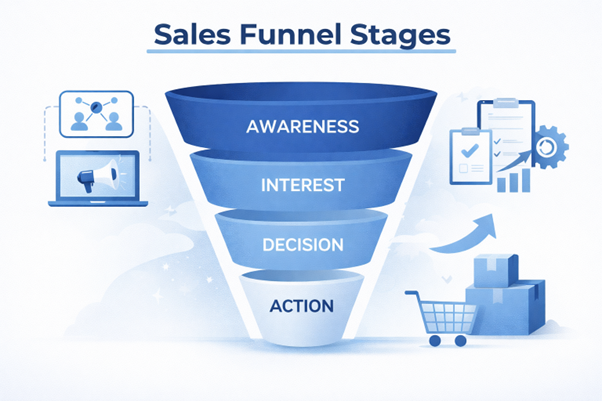
Every user is at a different stage in the buying journey. Your campaigns should match their intent and awareness level.
Tracking only clicks and leads does not give the full picture. SaaS businesses need deeper insights into user quality and revenue impact.
Not every lead has the same value for your SaaS business. Some users are just exploring, while others are ready to buy soon. This is when lead scoring helps you focus on high-intent users.
It uses behavior data like page visits, demo clicks, and engagement signals. This data helps you send better signals back to ad platforms.
Example:
A SaaS tool scores users who visit pricing pages higher. These users receive more targeted ads and convert faster.
Metric to track: Conversion quality score or SQL rate
Many SaaS companies rely only on Google Ads for growth. This limits reach and increases competition costs over time.
Different platforms serve different roles in the buyer journey. Using multiple channels helps you capture users at various stages.
Example:
A SaaS brand uses LinkedIn for demos and Google for bottom-funnel conversions. Their cost per demo drops steadily.
Metric to track: Cost per acquisition by channel
Broad keywords often bring traffic but not conversions. Long-tail keywords capture users with clear intent and specific needs.
These keywords usually have lower competition and better conversion rates. They also align well with SaaS use cases.
Example:
Instead of “CRM software,” a SaaS targets “CRM for small sales teams.” This brings fewer but more qualified leads.
Metric to track: Conversion rate by keyword group
Most SaaS users do not convert on their first visit. Remarketing helps you bring them back with relevant messages.
Remarketing Lists for Search Ads (RLSA) allows you to adjust bids for users who have already visited your site. This increases your chances of conversion.
Example:
A SaaS company retargets users who viewed pricing pages. These users see demo-focused ads and convert faster.
Metric to track: Remarketing conversion rate
Online conversions do not always show real business results. Many SaaS deals close after sales team interactions.
Offline conversion tracking connects ad data with CRM outcomes. This helps you understand which leads actually convert.
Example:
A SaaS brand links CRM data with ads. They discover that certain campaigns drive higher-paying customers.
Metric to track: Revenue per lead
Getting clicks is easy, but conversions need a better experience. Your landing page must clearly guide users toward action.
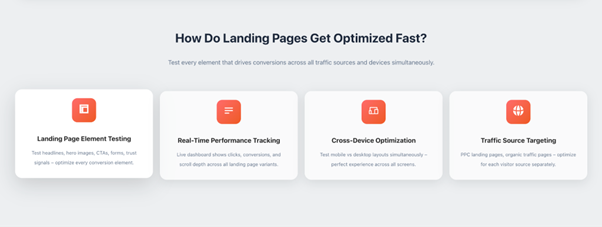
A slow or confusing page can kill your conversion rate quickly. Focus on clarity, speed, and user trust signals.
Example:
A SaaS company improves page speed and headline clarity. Their demo bookings increase within a few weeks.
Metric to track: Landing page conversion rate
Not every customer is the same. Different users are on different buying stages, which is why different users need different messages based on their journey stage. One campaign cannot serve all types of users.
Funnel-based campaigns help you guide users step by step toward conversion. This improves both engagement and results.
Example:
A SaaS tool runs awareness ads for beginners and demo ads for ready buyers. This improves overall conversions.
Metric to track: Conversion rate by funnel stage
Smart bidding works best when your data is accurate and clean. If the data is poor, it can lead to poor optimization and wasted budget.
This is why it is important that you feed high-quality conversion signals into your ad platform. This helps the system make better bidding decisions.
Example:
A SaaS company removes low-intent leads from tracking. Their smart bidding performance improves significantly.
Metric to track: Cost per conversion
PPC campaigns need regular checks to stay effective. The reason behind this is simple because overtime small issues can grow into large losses over time.
When you do regular audits, it can help you identify weak areas and improve performance quickly. They also help you stay aligned with changing goals.
Example:
A SaaS brand pauses low-performing keywords after an audit. Their overall ROI improves in the next cycle.
Metric to track: Return on ad spend (ROAS)
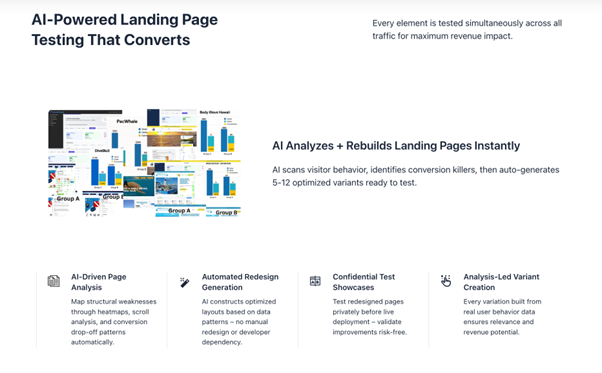
Platforms like CausalFunnel help in improving the ROAS by optimizing landing pages, ad campaigns and user journeys. They have a proven record in increasing ROAS for their clients such as Premium Sign Solution through crucial improvements solely done on their website’s landing page.
High traffic does not always mean high conversions. Many SaaS campaigns fail by chasing clicks instead of intent.
You should focus on users who are ready to take action. This improves both efficiency and conversion quality.
Example:
A SaaS company who shifts from generic ads to intent-based ads see an increase in their demo requests without raising the budget.
Metric to track: Cost per qualified lead
Even well-funded SaaS PPC campaigns can fail due to basic mistakes. These issues often look small but create big losses over time. If you ignore these mistakes, it can lead to a drop in the lead quality and could waste your ad spend.
Here are the most common mistakes and why they hurt conversions:
This is when CausalFunnel helps. They work together on CTA’s, headlines, and layouts, testing what works best for better conversion. They track and test, making sure that each element on your landing page drives more conversions.
Once you identify and fix these mistakes, you can quickly improve your SaaS PPC results. Because even small improvements can lead to better leads and lower acquisition costs.
Tracking the right metrics helps you make smarter budget decisions, showing if your campaigns are driving real business growth. Many SaaS teams track clicks but miss deeper performance signals.
Here are the key metrics you should focus on and why they matter:
Tracking these metrics gives you a full view of performance and growth. It helps you move beyond vanity metrics and focus on real results.
PPC for SaaS is not just about running ads and getting clicks. It’s also about applying a strong strategy, having clean data, and clear goals.
You must focus on high-intent users and meaningful conversions. This helps you grow faster without wasting budget on low-value traffic.
When you combine the right tactics with continuous optimization, results improve over time. In the end, SaaS PPC success depends on quality, consistency, and smart decisions.
Yes, PPC works well for SaaS companies when the right strategies are used, attracting high-intent users who are actively searching for solutions.
There is no single best platform for every SaaS business. Where Google Ads works well for intent, while LinkedIn helps with B2B targeting.
You can reduce CAC by targeting high-quality users and improving conversion rates. When you have better data and optimization, it can help lower costs in the long run.
Conversion tracking helps you measure what actually works in your campaigns ensuring your budget is spent on actions that drive revenue.
Start using our A/B test platform now and unlock the hidden potential of your website traffic. Your success begins with giving users the personalized experiences they want.
Start Your Free Trial

Empowering businesses to optimize their conversion funnels with AI-driven insights and automation. Turn traffic into sales with our advanced attribution platform.
Trusted by Customers


©CausalFunnel Inc. All rights reserved.