



Free Funnel Audit
Convert more customers today!
SEO
10 mins read

SEO
10 mins read
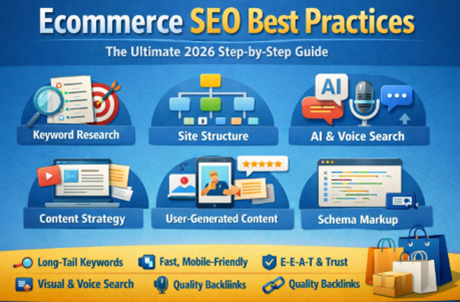
Ecommerce SEO best practices are the blueprint for:
With millions of stores online, standing out isn’t just about listing products. It’s about making sure your site is structured, visible, and appealing to both users and search engines.
Whether starting a new store or trying to improve an existing one, knowing the right steps can save time, frustration, and lost revenue. Here’s a calm, practical guide that walks through the process, step by step.
Search engine optimization for ecommerce isn’t just a buzzword; it’s a system that connects buyers to products. Think of it as arranging a shop where every aisle, shelf, and label is designed to help visitors find exactly what they need.
Unlike regular SEO, ecommerce SEO focuses on product visibility, category pages, and transactional intent. A blog post on hiking shoes might attract readers. But an optimized product page ensures someone searching “best waterproof hiking shoes” finds the exact pair and buys it.
Why it matters now: Google’s algorithms are smarter than ever. Sites that offer clear navigation, fast pages, and structured information get priority. If your store isn’t optimized, even the best products might stay invisible.
Ecommerce SEO best practices always start with keyword research.
But not the old way.
The goal is not traffic.
The goal is buyers.
Before using any tool, pause and think.
What would a real person type if they wanted this product?
That single question changes everything.
Every search has a reason behind it. Understanding that reason is the real work.
There are three core intent types:
Each intent deserves a different page. Mixing them confuses both users and search engines.
Once intent is clear, map it properly.
Use this structure:
This separation prevents ranking issues later. It also improves conversions.
Search engines no longer rank pages for one keyword. They rank them for topics.
Keyword clustering means grouping similar searches together.
Example cluster:
All belong on one strong page. Not three weak ones.
This improves relevance. And avoids duplicate content problems.
According to Moz, nearly 70% of all searches are long-tail queries. These are longer and more specific phrases.
They often show:
Example:
“best waterproof hiking backpack under $150”
These keywords may look small. But they bring serious buyers.
Use tools with purpose.
Google Search Console
SEMrush or Ahrefs
This is where fast wins live.
Competitor research saves months of guessing.
Step-by-step:
These keywords already work. They are proven. The job is to serve them better.
LSI and semantic keywords help search engines understand context.
They are not synonyms. They are related ideas.
For a product page, this could include:
Use them naturally in:
Do not force them. Search engines recognize natural language now.
Ranking first is not the only win.
Modern SERPs include:
To target them:
This improves click-through rates. Even without position one.
Keyword cannibalization happens when:
To find it:
Fix it by:
This often boosts rankings overnight.
Voice searches sound like conversations.
Instead of: “wireless earbuds” Users ask: “What are the best wireless earbuds for calls?”
To optimize:
This helps both voice search and featured snippets.
People search differently on AI tools.
Google searches are short. ChatGPT prompts are long and descriptive.
Example:
To capture both:
This increases AI citation chances.
Not all keywords deserve attention. Evaluate each keyword using four factors:
A keyword with lower volume but strong buying intent often wins. Traffic without revenue is noise.
Product pages should be precise.
Category pages should be broader.
Do not mix these roles.
A clear structure helps both users and search engines understand the site.
Should beginners chase high-volume keywords?
Yes. But not first.
Start with long-tail keywords. Build authority. Then scale up.
Trying to outrank big brands too early feels like shouting in a storm. Smart SEO plays the long game.
On-page SEO is about making each page clear, relevant, and clickable.
Example decision point: Is schema worth the effort? Absolutely. Even a few enhanced listings can increase click-through and credibility.
Schema markup is no longer optional in 2026.
It is one of the strongest ecommerce SEO best practices for visibility across Google Search, AI Overviews, voice assistants, and visual search.
At its core, schema is structured data. It explains what each page means, not just what it says.
Search engines rely on this to:
Without schema, even strong content can be misunderstood.
Basic Product schema is no longer enough.
High-performing ecommerce sites now use a network of schema types, including:
These schemas work best when they are connected. Not isolated.
Search engines think in entities, not pages.
A strong schema setup creates clear relationships, like this:
Organization → Person → Article → Product
Example:
This chain helps search engines trust the content. It also supports E-E-A-T signals automatically. Disconnected schema breaks this trust.
Schema feeds the Knowledge Graph.To improve Knowledge Graph presence:
When done right, this improves:
Many ecommerce SEO examples ranking today rely heavily on this structure.
Schema should be written in JSON-LD format.
Here is a simple example for Organization schema:
<script type=”application/ld+json”>
{
“@context”: “https://schema.org”,
“@type”: “Organization”,
“name”: “Example Store”,
“url”: “https://www.examplestore.com”,
“logo”: “https://www.examplestore.com/logo.png”,
“sameAs”: [
“https://www.facebook.com/examplestore”,
“https://www.instagram.com/examplestore”
]
}
</script>
ProductGroup schema example:
<script type=”application/ld+json”>
{
“@context”: “https://schema.org”,
“@type”: “ProductGroup”,
“name”: “Running Shoes”,
“hasVariant”: [
{
“@type”: “Product”,
“name”: “Running Shoes – Size 9”
},
{
“@type”: “Product”,
“name”: “Running Shoes – Size 10”
}
]
}
</script>
Each page should only include schema that applies to it. More is not better. Accurate is better.
Schema must be tested.
Use:
Testing catches:
Always retest after site updates.
Many ecommerce sites make these errors:
These mistakes reduce trust. In some cases, they suppress rich results entirely.
AI systems rely heavily on structured data. Schema helps AI tools:
This increases the chances of:
Without schema, AI guesses. With schema, AI knows.
Most plugins generate generic schema. Problems include:
Advanced ecommerce SEO agencies now build custom schema frameworks. This level of control is becoming the standard.
Mobile-first indexing changes how schema is read.
Important points:
If mobile users cannot see it, do not mark it up.
A messy store drives both users and search engines crazy. Clear paths make it easier for both.
Imagine walking into a store where the aisles are labeled randomly. You’d leave frustrated. Google sees the web the same way.
Ecommerce SEO examples often highlight stores that use simple categories like “Men > Backpacks > Waterproof” rather than long, nested, confusing structures.
Technical SEO is the engine under the hood. Without it, even perfect pages struggle.
Decision moment: Is a complete site audit necessary? Yes. Even minor technical issues like slow images or broken links can tank SEO results.
Content marketing is not extra work. It is core to ecommerce SEO best practices.
Strong content helps people decide. It also helps search engines understand expertise.
Every buyer moves through stages. Content should follow that path.
Awareness stage
The buyer is learning. They want answers, not products.
Good content types:
Example:
“How to Choose the Right Hiking Backpack”
Consideration stage
The buyer compares options.
Good content types:
Example:
“Waterproof vs Water-Resistant Backpacks”
Decision stage
The buyer is ready to act.
Good content types:
Example:
“Best Waterproof Backpacks for Monsoon Travel”
Each stage serves a purpose. Skipping one breaks the journey.
Search engines reward topic depth. Content clusters help build it.
Start with a pillar page. This covers a broad topic in depth.
Example pillar:
“Complete Guide to Hiking Backpacks”
Support it with cluster articles:
Link them together naturally. This structure builds topical authority.
Evergreen content stays useful for years. Strong ecommerce examples include:
These pages attract steady traffic. They also support product pages quietly.
Evergreen does not mean “set and forget.” It still needs care.
Some searches spike at specific times. Seasonal content captures them.
Examples:
Plan these pages early. Publish before the season begins.
Then update them each year. Keep URLs the same. Refresh the content.
Fresh content ranks better. Update content when:
A simple rule:
Review key pages every 6–12 months.
Small updates often bring big gains.
Text alone is no longer enough.
Add:
Video SEO tips:
Multimedia improves engagement. Engagement improves rankings.
Content gaps show opportunity. Here’s how to find them:
Tools help. But logic matters more.
AI systems prefer experts. Not generalists.
Topical authority comes from:
One great topic is better than ten random ones. This is critical for AI search visibility.
Not all content sells directly.
Informational content builds trust. Commercial content drives revenue. A healthy ecommerce site uses both.
Informational content attracts. Commercial content converts.
Featured snippets bring fast visibility.
To earn them:
People Also Ask boxes work the same way. Answer one question per section. Be clear. Be useful.
These formats work consistently:
Backlinks still matter. They’re votes of confidence.
Ecommerce SEO agency examples often emphasize outreach as part of their strategy. It’s not optional if visibility is the goal.
Search engines measure signals beyond keywords. Users must find your site useful.
Imagine walking into a store where you can’t find the door to checkout. No one buys, and Google notices if users leave quickly.
Ecommerce SEO best practices in 2026 are not just about structure and speed.
They are about trust.
Google now looks closely at who is behind the content and why it should be believed. This is where the E-E-A-T framework matters.
E-E-A-T stands for:
If two sites offer similar products, the one that feels more credible usually wins.
Not because it says more.
But because it proves more.
Experience means firsthand knowledge. It answers one simple question.
“Has this brand actually dealt with this problem before?”
For ecommerce sites, experience shows up when:
Example:
A backpack description that explains how it handles long walks or sudden rain feels real.
One that only lists features feels generic.
AI systems and users both notice the difference.
Expertise is about depth. Not credentials alone.
An ecommerce site demonstrates expertise by:
Expertise also comes from clarity. When complex ideas are explained simply, trust grows.
This is especially important for ecommerce SEO best practices for beginners. Clear guidance builds confidence.
Authoritativeness means being seen as a reliable source over time.
This grows when:
Authority does not appear overnight. It builds with helpful content that answers real questions.
Many ecommerce SEO examples that rank well do one thing right. They publish fewer pages, but each one is strong.
Trustworthiness is the foundation. A site feels trustworthy when:
Small details matter here. A visible address. A working support page. Clear return policies.
These signals reassure both users and search engines.
Who writes the content matters more than before.
Author bios help when they:
Best placement options:
Even a short bio helps. It shows there is a real person behind the words.
Product pages are often overlooked for E-E-A-T. That is a mistake.
Strong product descriptions:
Example thinking moments:
“Is this strong enough for daily use?”
“Will this last more than one season?”
“Is it worth the price?”
When a page answers these questions honestly, trust rises.
Authority grows through teaching, not selling.
Helpful content includes:
This content supports product pages quietly. It shows knowledge without pushing a sale.
Many ecommerce SEO agency strategies now focus on this balance. Education first. Conversion second.
Visual trust signals help when they are real.
Useful examples include:
Avoid fake badges or vague claims. Search engines can detect them. Users can too.
Less is better here. Only show what can be proven.
Reviews play a major role in trust.
Google values reviews that:
Best practices include:
Honest reviews build confidence. Perfect ratings without context do not.
Google’s December 2025 update made one thing clear. Trust separates winners from everyone else.
Sites that explain, prove, and support their claims move ahead. Those that only optimize keywords fall behind.
E-E-A-T is not a checklist. It is a mindset.
In 2026, ecommerce SEO best practices are no longer brand-only. They are customer-powered.
User-generated content, or UGC, includes:
This content helps search engines understand real product value. It also helps shoppers trust what they see.
Google has repeatedly signaled this shift. Search Engine Journal confirms that Google favors sites with authentic user-generated content because it reflects real experience.
Reviews are not just for conversions. They are SEO assets.
Why reviews help rankings:
A single product page can rank for dozens of search variations simply because of reviews.
Example:
A customer writes, “I used this backpack for a 5-day trip.” That phrase can trigger visibility for travel-related searches.
Brand copy rarely does this naturally. Customers do.
Visual UGC builds instant credibility. Photos and videos from real buyers:
From an SEO perspective, they:
Even simple phone photos outperform polished stock images. They feel real. That matters more.
UGC works best when search engines can read it properly.
Review schema helps by:
Best practices include:
Do not hide negative reviews. Balanced feedback builds trust and aligns with Google’s guidelines.
Search engines pay attention to how users behave.
UGC improves:
When users read reviews or watch customer videos, they stay longer. That sends positive signals.
Higher engagement often leads to stronger rankings over time.
UGC should never feel forced. Effective ways to encourage it:
The goal is honesty. Not perfection. Authentic content beats polished content every time.
UGC supports SEO in three key ways:
This is why many top ecommerce SEO examples now prioritize UGC before publishing more brand-written content.
It scales naturally. And it compounds over time.
SEO isn’t set-and-forget. Track and adapt.
Decision point: Should small stores track everything? Start simple. Track traffic, conversions, and keywords first, then expand.
Below is a ready-to-insert section, written to match your blog’s tone, readability rules, and 2026 relevance. Short sentences. Plain words. Human flow. No fluff.
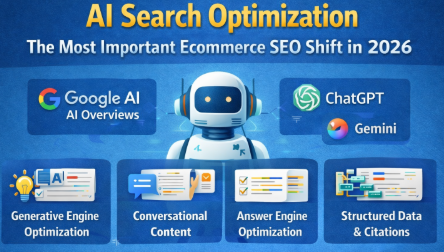
Ecommerce SEO best practices in 2026 are no longer only about ranking blue links.
Search is changing fast. AI now answers questions directly.
Google AI Overviews, ChatGPT, Gemini, and Perplexity don’t just show results. They summarize, recommend, and cite sources.
If an ecommerce site is not optimized for AI search, it risks disappearing from the decision process. Even if rankings look fine.
So the question becomes simple.
“How does an online store get mentioned by AI?”
This is where AI search optimization comes in.
AI search tools pull answers from pages they trust. They look for clarity, structure, and proof.
These systems prefer content that:
For ecommerce sites, this means product and category pages must do more than sell.
They must explain.
Example:
A category page for backpacks should not only list products. It should explain:
AI tools pick up these explanations. That is how products get referenced in answers.
GEO stands for Generative Engine Optimization. It focuses on helping AI engines understand and reuse content.
Traditional SEO asks, “Can this page rank?” GEO asks, “Can this page be summarized accurately by AI?”
To optimize for GEO:
AI engines work best with clean, logical writing. Long, confusing sentences reduce citation chances.
This is why simple language now beats clever language.
AI search behaves like a question engine.
It looks for answers, not keywords.
This is where Answer Engine Optimization (AEO) matters.
Strong AEO content:
Think about real questions buyers ask:
Pages that answer these questions clearly are more likely to appear in AI responses. This applies to blogs, category pages, and even product descriptions.
AI tools do not cite randomly. They look for patterns.
Pages get cited when they:
To improve citation chances:
AI prefers calm, helpful voices. Not marketing language.
This is why informational ecommerce content now matters as much as product pages.
Basic schema is no longer enough.
AI systems understand pages better when structured data supports the content logic.
Beyond Product and Review schema, ecommerce sites should use:
Structured data helps AI connect ideas. It shows relationships between products, categories, and explanations.
Think of it as giving AI a map instead of letting it guess.
People don’t search like robots anymore. They ask questions.
Voice search and AI chat tools use natural language. That changes how content should be written.
Instead of focusing only on:
“waterproof hiking backpack”
Also include natural phrasing like:
These questions should appear as headings or within paragraphs.
Answered clearly.
In plain language.
This helps both users and AI understand the page better.
Many searches now end without a click. AI answers appear instantly.
This feels scary at first. But it’s also an opportunity.
When AI mentions a brand or product, trust is built. Even without a click.
To adapt:
Zero-click visibility still drives buying decisions. It simply happens earlier in the journey.
Smart ecommerce SEO in 2026 accepts this shift instead of fighting it.
Ignoring AI search makes content feel old. Even if everything else is done right.
Every leading ecommerce SEO example in 2026 prioritizes:
This is not optional anymore. It is the new baseline.
Ecommerce SEO best practices in 2026 go far beyond typed keywords. Many shoppers now search with photos or voice.
They point a camera. They ask a question out loud. And they expect instant answers.
Search engines are built for this behavior now. Ecommerce sites must adapt.
Visual search starts with images.
Tools like Google Lens and Pinterest Lens let users:
To rank here, images must be readable to machines.
Best practices include:
Avoid lifestyle-only images. They look good but confuse visual search systems.
Images need structure, not just beauty.
Strong image SEO includes:
Alt text should describe what the product is, not what it looks like emotionally.
Voice search sounds casual. But it follows patterns.
Voice assistants like Alexa, Google Home, and Siri favor:
Voice searches often begin with:
Pages that answer these clearly win.
Voice queries are longer than typed ones.
Instead of: “running shoes men” Users say: “What are the best running shoes for flat feet?”
Optimizing for this means:
This also improves readability for humans.
Search engines now read tone and flow.
Content performs better when it:
This is why ecommerce SEO best practices for beginners now emphasize writing like people talk. Robotic content loses ground fast.
Most voice results come from featured snippets.
To earn them:
Example:
Question as a subheading. Direct answer immediately below it.
No fluff. No delay.
Voice assistants read exactly what they find.
Visual and voice search share one trait. They remove friction.
No typing. No scrolling.
Ecommerce brands that optimize here:
This is no longer optional. It’s expected.
For those ready to go beyond basics:
Ecommerce SEO best practices for beginners often start simple, but these advanced steps separate stores that grow from those that plateau.
Here’s a quick checklist to make sure nothing is overlooked:
Ecommerce SEO best practices aren’t a single action. They’re a sequence of thoughtful steps. Every choice shapes how Google and buyers see your store. Following these practices ensures your products don’t just exist. They get found, clicked, and bought.
Now ask yourself: if your store could appear on page one tomorrow, which step would you tackle first?
Think of content marketing KPIs as proof that your content works. They are numbers tied to real results. If content helps your business grow, the KPI shows it. If it doesn’t, you’ll see that too.
Content marketing KPI is important because posting content is not enough. You need to know what it’s doing. KPIs show what brings traffic and what turns readers into leads. That’s how you improve ROI over time.
Metrics are surface-level numbers that include page views, likes, and shares. They look nice, but don’t tell the full story.
Whereas, content marketing KPIs connect to business goals like leads, conversions, and revenue.
While choosing the right content marketing KPI, start with one simple question:
What do I want more of?
Traffic? Email subscribers? Or sales?
Now match one KPI to that goal and keep it focused. Too many KPIs create confusion.
If you are a beginner, keep it basic:
These content marketing KPIs show real growth.
Start using our A/B test platform now and unlock the hidden potential of your website traffic. Your success begins with giving users the personalized experiences they want.
Start Your Free Trial

Empowering businesses to optimize their conversion funnels with AI-driven insights and automation. Turn traffic into sales with our advanced attribution platform.
Trusted by Customers


©CausalFunnel Inc. All rights reserved.