



Free Funnel Audit
Convert more customers today!
SEO
10 mins read

Ads
10 mins read
When bookings slow down, revenue feels it immediately. Sea Rocket operates high speed ocean boat cruises in Fort Lauderdale. The company relies heavily on online reservations to consistently fill seats and protect daily revenue performance.
They came to CausalFunnel to run a structured A/B test focused on improving booking intent through a simple interface adjustment.
Sea Rocket’s cruise page was generating steady traffic. Visitors were viewing seating options and reviewing trip details. However, booking clicks were lower than expected.
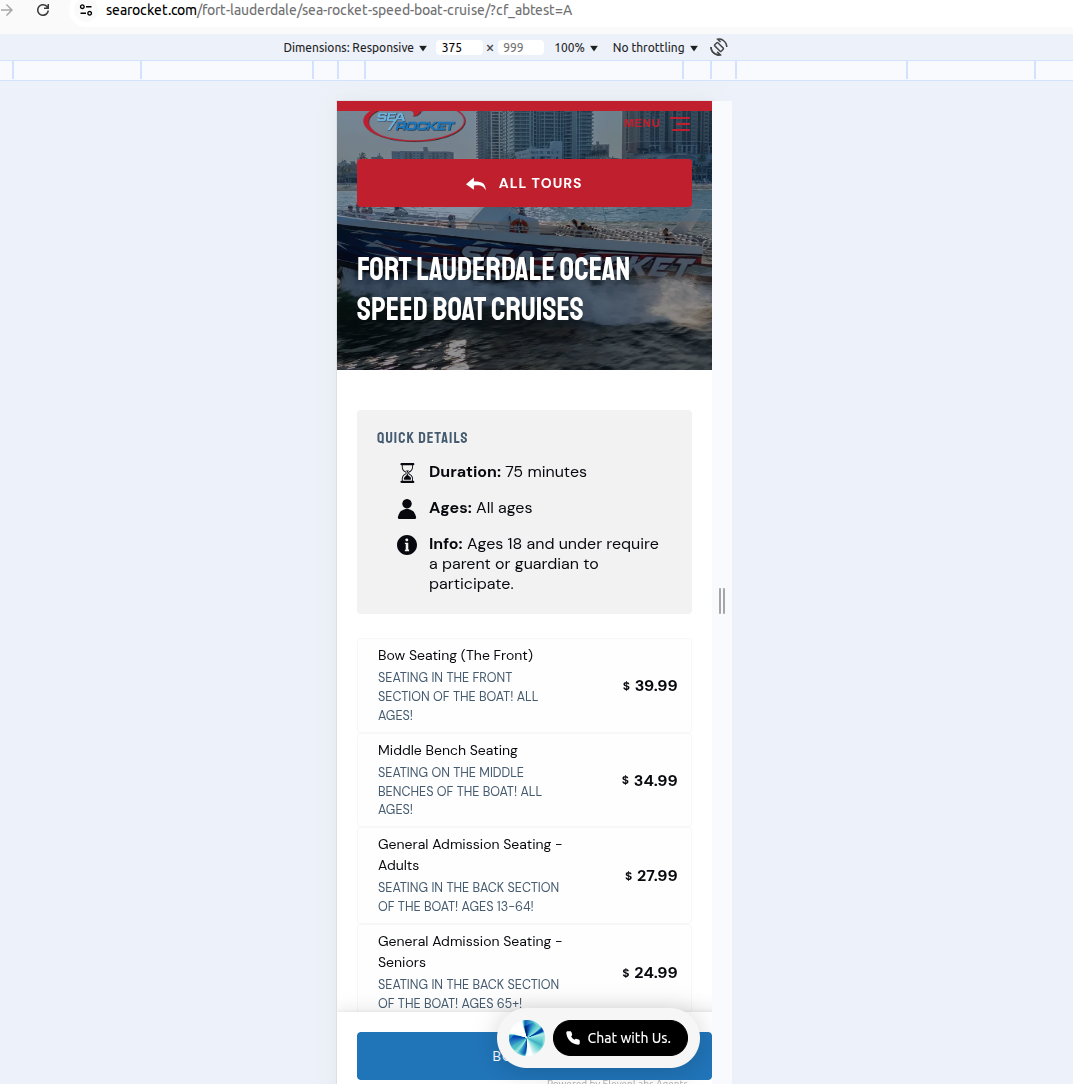
The original layout placed the primary booking action further down the page. Users had to scroll before seeing a strong call to action. On mobile devices, this created friction. High intent users were not prompted to act immediately after reading the headline and viewing the hero image.
The challenge was clear. Reduce friction. Capture booking intent earlier. Increase completed booking actions without redesigning the entire experience.
The CausalFunnel team began by analyzing user interaction patterns within the Traffic Optimization dashboard. Engagement metrics showed that users were consuming page content but delaying action.
User interaction data showed that visitors were engaging with the page but not clicking the booking button at the expected rate.
Scroll behavior indicated that many users never reached the lower section where the primary call to action was placed. Based on this behavior pattern, the team tested moving the Book Now button higher on the page to capture intent earlier in the session.
The experiment focused on a single structural change. In the variant version, the Book Now button was moved directly below the hero section and above the quick details block. No pricing adjustments were made. No copy changes were introduced. The test isolated button placement as the only major variable.
Traffic was evenly distributed between both versions to maintain clean statistical comparison.
CausalFunnel AI provided the framework to design, launch, and measure the experiment with randomized traffic allocation. This ensured unbiased data collection.
The platform monitored:
Real time analytics allowed the team to validate consistency rather than relying on short term spikes. The test ran from the beginning of October 2025 across 154 days, providing a reliable data window.
CausalFunnel ensured that results were statistically sustained before recommending a permanent rollout.
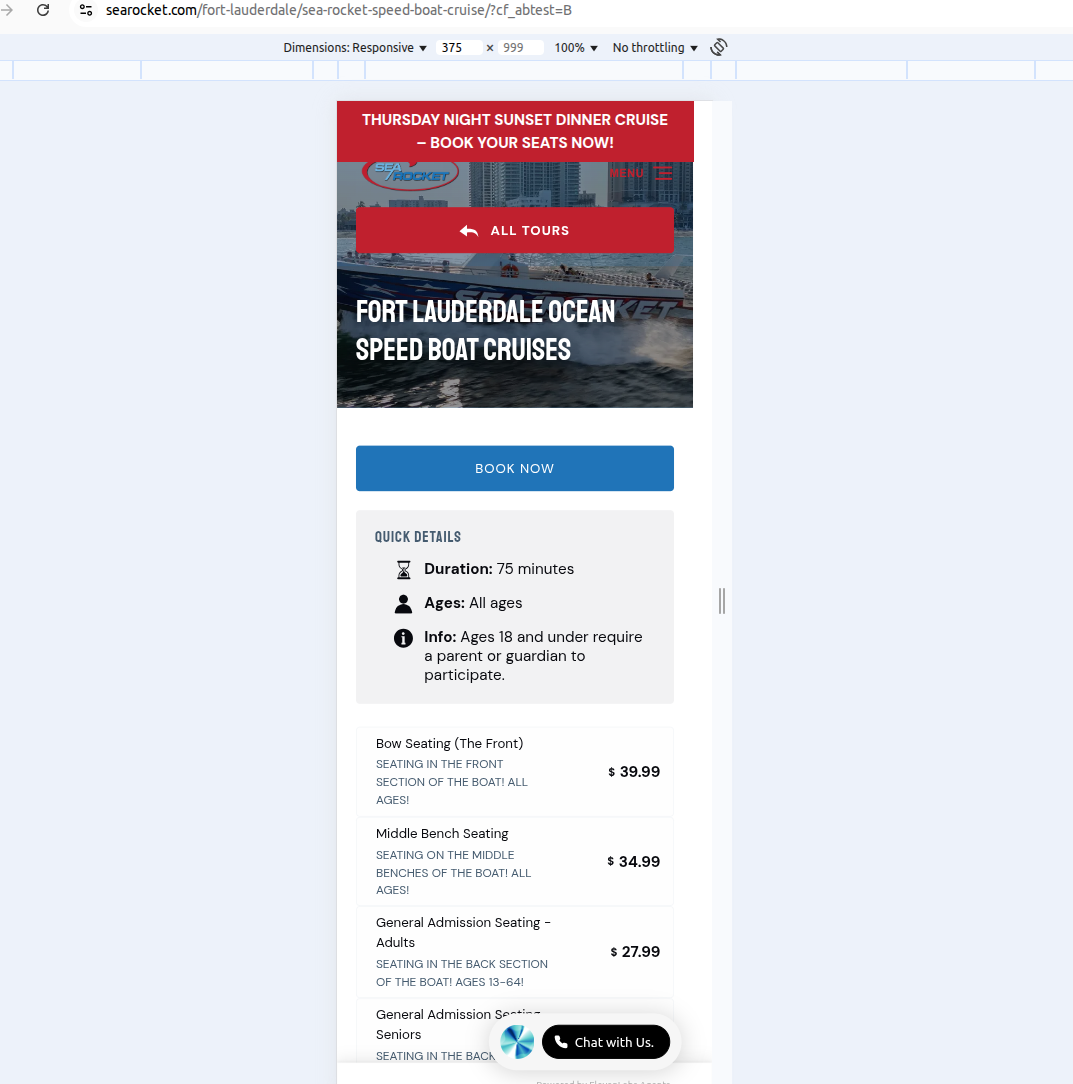
Updated layout with Book Now button positioned directly below the hero section for immediate visibility.
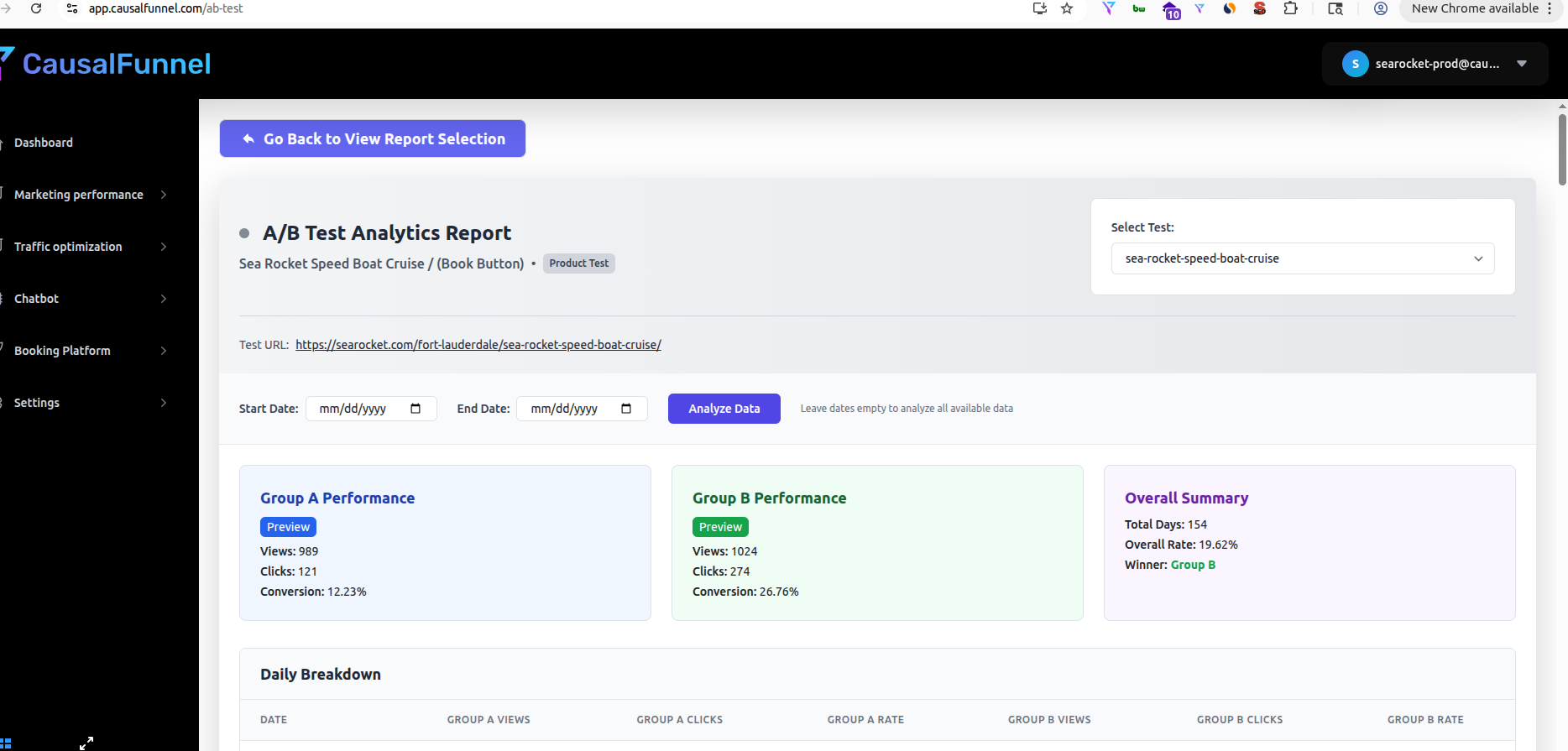
This test confirmed that placement of a primary call to action significantly impacts user behavior. By moving the Book Now button higher on the page, Sea Rocket reduced friction and captured intent earlier in the decision process.
Most importantly, the increase in clicks translated into meaningful booking growth. The results were consistent across the test period, giving the team confidence to make the change permanent across booking pages.
A/B Test Result:
This Sea Rocket case study demonstrates how structured A/B testing can uncover high impact improvements without major redesigns.
Through disciplined experimentation, randomized traffic control, and real time validation, CausalFunnel identified a single layout adjustment that delivered measurable conversion lift.
Small changes, when tested correctly, can produce significant revenue impact.
Purchases do not always appear instantly. Depending on your attribution window, they may show within a few hours or even a few days. If you are using a 7-day click setting, a customer can click today and buy later, and the sale will still be counted.
This usually happens because the pixel is not installed correctly, the event is placed on the wrong page, or the domain is not verified. Start by checking Test Events and make sure the Purchase event fires only on the order confirmation page.
In most cases, yes. The Pixel tracks browser activity, but browsers now block or limit some data. Conversions API sends data directly from your server, which improves accuracy and reduces data loss.
You should test your tracking every time you change your website, checkout process, or ad structure. Even small updates can break event tracking without you noticing.
Daily fluctuations are normal. Look at 7-day trends instead of single-day performance. Reacting too quickly can lead to turning off campaigns that are actually working.
If you sell directly through Facebook or Instagram Shops, Meta handles much of the tracking. But if you send traffic to an external site, you need Pixel and preferably Conversions API for accurate reporting.
Start using our A/B test platform now and unlock the hidden potential of your website traffic. Your success begins with giving users the personalized experiences they want.
Start Your Free Trial

Empowering businesses to optimize their conversion funnels with AI-driven insights and automation. Turn traffic into sales with our advanced attribution platform.
Trusted by Customers


©CausalFunnel Inc. All rights reserved.