








Is your chiropractic business struggling to attract new patients? If after being online present your competitors getting more bookings? If that’s the case, you have reached the right place.
Most people today search online before scheduling their first chiropractic appointment. If your practice doesn’t appear when they search, those patients choose someone else.
Many studies have been carried out that show over 70% of patients research healthcare providers online, and nearly 75% of clicks go to Google’s top three results. If your website isn’t shown there, your chiropractic practice is effectively invisible to high-intent patients.
So what to do? Without a targeted SEO for chiropractors strategy, even the best clinics lose patients to competitors with stronger online visibility. Practices that invest in chiropractic SEO consistently rank higher, receive more calls, and book more appointments.
This guide walks you through exactly how chiropractor SEO works. You’ll learn how to choose the right keywords, optimize your website, and dominate local search results so patients find you first.

Why SEO for Chiropractors Is Critical for Your Practice
In this technological era, your patient’s behavior has changed drastically. Before visiting a professional chiropractor, they search online. They try to understand symptoms, compare nearby clinics, read reviews, and check availability online. If your name doesn’t appear during that research phase, you’re losing patients before they ever contact you.
Effective chiropractic SEO focuses on local intent. Patients aren’t searching nationally; they’re searching for solutions near them.
Search terms like “chiropractor near me,” “back pain chiropractor,” or “auto accident chiropractor” trigger local search results, where visibility directly impacts bookings.
A well-optimized SEO for a chiropractor’s website ensures your practice shows up with fast-loading pages, clear service descriptions, strong reviews, and easy appointment booking options. These elements build trust quickly and convert searchers into real patients.
Chiropractors who rank higher don’t just get more website traffic; they receive more phone calls, appointment requests, and in-office visits. Meanwhile, clinics with weak SEO struggle to compete, even if their clinical care is excellent.
Why SEO for Chiropractors Website Matters
Local SEO is especially important for chiropractic practices. When someone searches for a chiropractor, Google prioritizes nearby clinics in map results and local listings.
Practices that rank well in these local results receive significantly more calls and appointment requests. Patients trust what they see first, especially when strong reviews, accurate contact information, and clear services are visible.
On the other hand, chiropractors with practices with poor SEO struggle to attract new patients, but offering Visitor Incentives can help convert more anonymous visitors into booked appointments.
The business impact goes beyond just website visits. Better search rankings lead to:
- More phone calls from potential patients or real-time support through an AI Shopping Buddy
- Higher appointment booking rates with help from an A/B Test Platform that optimizes website experiences
- Increased practice revenue and growth by understanding Customer Lifetime value
- Better return on marketing investments with data-driven insights from advanced SEO Tools increasing your traffic organically.
Search engine optimization isn’t just about websites anymore. It’s about connecting with patients when they need help most. A strong chiropractic SEO strategy, supported by AI-powered SEO Tools, puts your practice in front of people actively seeking treatment.
8 Key Benefits of Professional Chiropractic SEO

1. Increased Local Visibility
Local SEO helps your practice dominate search results in your area prominently when patients search for care nearby. When patients search for chiropractors in your area of service, your practice appears first.
Searches like “chiropractor near me” or “back pain chiropractor” trigger local results, where Google prioritizes optimized practices. Proper Google Business Profile optimization increases your chances of appearing in the local map pack, which is often the first thing patients see before choosing a clinic.
2. Higher Quality Patient Leads
SEO attracts patients who are actively looking for chiropractic care. These aren’t random visitors browsing the internet casually. Organic search traffic converts 8x better when supported by A/B Testing, which turns anonymous website visits into predictable revenue through user-segment testing and traffic management. These qualified leads are more likely to book appointments and stay as long-term patients.
3. 24/7 Patient Acquisition
Your website works 24/7 to attract new patients. Unlike paid ads that stop when your budget ends, organic rankings keep generating leads, while our advanced Ads optimizes campaigns, lowers costs, and boosts conversions. Patients can find your practice at any hour of day. This passive patient generation system works even while you sleep. Good SEO creates a consistent stream of new patient inquiries.
4. Enhanced Practice Credibility
High search rankings build trust and authority with potential patients. People assume businesses that rank first are the best options. Google’s algorithm considers expertise and trustworthiness when ranking healthcare websites. Better rankings signal to patients that your practice is reputable. This credibility advantage helps you compete against larger medical groups.
5. Competitive Advantage
Outranking local competitors gives you a significant market advantage. Most chiropractic practices don’t invest properly in SEO strategies. This creates opportunities for practices that do optimize correctly. By claiming the top positions, you capture market share from competitors. Local dominance through SEO translates directly into more patient appointments.
6. Measurable Business Growth
SEO makes it easy to see what’s working in your marketing. With tools like Google Analytics, you can track how many patients find you through search, how many calls, and how many book appointments. You’ll know if your revenue is growing and can use that data to decide where to invest. Clear results also make it easier to explain the value of SEO to your team.
Complete Chiropractic Website SEO Components

A successful chiropractic SEO strategy is built from multiple connected components, not a single tactic. Ranking consistently in local search requires your website, content, technical setup, and authority signals to work together in a structured way. When even one of these elements is missing or weak, it limits your visibility and reduces patient inquiries.
The sections below break down every essential chiropractic website SEO component, explaining what matters, why it matters, and how to implement it correctly so your practice can compete and win in local search results.
- Condition-Based Keywords: These target specific pain problems patients experience daily. Examples include “lower back pain treatment” and “sciatica relief options.” Patients often search for symptoms before looking for chiropractors specifically.
- Service-Based Keywords: These focus on specific treatments your practice offers patients. Terms like “spinal decompression therapy” and “sports injury treatment” work well. Include your city name for better local targeting.
- Local Keywords: Combine your services with location-specific terms for maximum impact. “Chiropractor in [city name]” and “[city] back pain specialist” capture local searches effectively.
- Competition Analysis Process: Research what keywords your local competitors currently rank for. SEO Tools help analyze competitor rankings and keyword gaps. Look for gaps where competitors aren’t targeting valuable search terms. Focus on keywords where you can realistically outrank existing results.
- Long-tail Strategy Benefits: Longer, more specific keyword phrases have less competition but higher conversion rates. “Best chiropractor for herniated disc treatment” converts better than just “chiropractor.”
Chiropractic Keyword Research and Strategy
Successful SEO starts with finding the right keywords your patients use. Most chiropractors make the mistake of targeting keywords that are too competitive. Smart keyword research focuses on terms your local patients actually search for.
Essential SEO Tools for Keyword Research:
- Google Keyword Planner (free baseline data)
- SEMrush (comprehensive competitor analysis)
- Ahrefs (detailed search volume and difficulty scores)
- Ubersuggest (budget-friendly alternative option)
Types of Chiropractic Keywords to Target:
Condition-Based Keywords: These target specific pain problems patients experience daily. Examples include “lower back pain treatment” and “sciatica relief options.” Patients often search symptoms before looking for chiropractors specifically.
Service-Based Keywords: These focus on specific treatments your practice offers patients. Terms like “spinal decompression therapy” and “sports injury treatment” work well. Include your city name for better local targeting.
Local Keywords: Combine your services with location-specific terms for maximum impact. “Chiropractor in [city name]” and “[city] back pain specialist” capture local searches effectively.
Competition Analysis Process: Research what keywords your local competitors currently rank for, SEO Tools helps analyze competitor rankings and keyword gaps. Look for gaps where competitors aren’t targeting valuable search terms. Focus on keywords where you can realistically outrank existing results.
Long-tail Strategy Benefits: Longer, more specific keyword phrases have less competition but higher conversion rates. “Best chiropractor for herniated disc treatment” converts better than just “chiropractor.”
On-Page SEO for Chiropractic Websites
On-page SEO optimization ensures Google understands what each webpage offers patients. Every page needs proper optimization to rank well in search results.
Title Tag Optimization Best Practices:
- Include your primary keyword and location in every title
- Keep titles under 60 characters for proper Google display
- Make each title unique across all website pages
- Front-load the most important keywords when possible
Once your keywords are defined, on-page SEO ensures each page on your chiropractic website clearly communicates its purpose to search engines while persuading potential patients to click, stay, and book an appointment.
- Meta Description Guidelines: Write compelling descriptions that encourage clicks from search results. Include your main keyword and a clear benefit statement. Keep descriptions between 150-160 characters for optimal display. Add a call-to-action like “Call today for an appointment.”
- Header Structure Requirements: Use H1 tags for your main page topic only. Organize content with H2 and H3 subheadings logically. Include keywords naturally in headers without forced stuffing. This structure helps both users and search engines understand content.
- Content Optimization Strategies: Write naturally for patients first, search engines second, always. Include keywords throughout the content, but avoid obvious repetition patterns. Answer common patient questions within your content comprehensively. Use bullet points and short paragraphs for better readability.
- URL Structure Best Practices: Create clean, descriptive URLs that include your target keywords. Use hyphens to separate words instead of underscores consistently. Keep URLs short and avoid unnecessary parameters or numbers. Examples: /back-pain-treatment/ or /chiropractor-denver/
After optimizing your Google Business Profile, consistent business information, reviews, and locally relevant content, it becomes the signals that reinforce your chiropractic practice’s trust, authority, and visibility in local search results. For a successful chiropractic seo, work on this:
- NAP Consistency Requirements: Your Name, Address, and Phone number must match exactly across all platforms. Inconsistent information confuses Google and hurts local rankings significantly. Check every directory, social profile, and website for accuracy regularly.
- Local Citation Building Process: Submit your practice information to relevant healthcare directories consistently. Focus on high-authority sites like Healthgrades, WebMD, and Yelp. Industry-specific directories often provide more value than general business listings.
- Review Management Strategy: Encourage satisfied patients to leave positive reviews on multiple platforms. Respond professionally to all reviews, both positive and negative feedback. More recent reviews carry more weight in local ranking algorithms.
You can capture more leads with AI Shopping Buddy, your always-available, intelligent chatbot that helps engage visitors instantly, provide personalized recommendations, and guide them to leave reviews or book appointments seamlessly.
- Local Content Creation Ideas: Write about health topics relevant to your local community specifically. Mention local events, sports teams, or community health initiatives. Create location-specific service pages for each area you serve.
- Mobile Responsiveness Requirements: Google uses mobile-first indexing for all websites now exclusively. Your site must work perfectly on smartphones and tablets. Test your website on multiple devices regularly to ensure proper functionality.
- SSL Certificate Installation: HTTPS encryption is required for healthcare websites handling patient information. Google treats SSL certificates as a trust signal and ranking factor. Most hosting providers offer free SSL certificates through Let’s Encrypt.
- Site Structure and Navigation: Create clear navigation that helps users find information quickly and easily. Use internal linking to connect related pages and distribute page authority. Implement breadcrumb navigation for better user experience and SEO benefits.
- Schema Markup Implementation: Add structured data to help Google understand your business information better. The healthcare schema includes special markup for medical practices and services. This can help you appear in rich search results.
Meta Description Guidelines: Write compelling descriptions that encourage clicks from search results. Include your main keyword and a clear benefit statement. Keep descriptions between 150-160 characters for optimal display. Add a call-to-action like “Call today for an appointment.”
Header Structure Requirements: Use H1 tags for your main page topic only. Organize content with H2 and H3 subheadings logically. Include keywords naturally in headers without forced stuffing. This structure helps both users and search engines understand content.
Content Optimization Strategies: Write naturally for patients first, search engines second always. Include keywords throughout content but avoid obvious repetition patterns. Answer common patient questions within your content comprehensively. Use bullet points and short paragraphs for better readability.
URL Structure Best Practices: Create clean, descriptive URLs that include your target keywords. Use hyphens to separate words instead of underscores consistently. Keep URLs short and avoid unnecessary parameters or numbers. Examples: /back-pain-treatment/ or /chiropractor-denver/
Local SEO for Chiropractic Practices
Local SEO is crucial because most patients search for nearby healthcare providers. Google prioritizes local businesses for location-specific healthcare searches consistently.
Google My Business Optimization Steps:
- Claim and verify your business profile completely
- Add high-quality photos of your office and staff
- Include accurate hours, phone number, and address information
- Choose the most specific business category available
- Write a compelling business description with keywords
NAP Consistency Requirements: Your Name, Address, and Phone number must match exactly across all platforms. Inconsistent information confuses Google and hurts local rankings significantly. Check every directory, social profile, and website for accuracy regularly.
Local Citation Building Process: Submit your practice information to relevant healthcare directories consistently. Focus on high-authority sites like Healthgrades, WebMD, and Yelp. Industry-specific directories often provide more value than general business listings.
Review Management Strategy: Encourage satisfied patients to leave positive reviews on multiple platforms. Respond professionally to all reviews, both positive and negative feedback. More recent reviews carry more weight in local ranking algorithms.
You can capture more leads with AI Shopping Buddy, your always-available, intelligent chatbot that helps engage visitors instantly, provide personalized recommendations, and guide them to leave reviews or book appointments seamlessly.
Local Content Creation Ideas: Write about health topics relevant to your local community specifically. Mention local events, sports teams, or community health initiatives. Create location-specific service pages for each area you serve.
Technical SEO Fundamentals
Technical SEO ensures your website works properly for both users and search engines. Poor technical performance can prevent even great content from ranking well.
Page Speed Optimization Priorities:
- Compress images to reduce file sizes significantly
- Use browser caching to improve repeat visitor experience
- Minimize CSS and JavaScript files when possible
- Choose fast, reliable web hosting providers
Google considers page speed a direct ranking factor for all searches. Pages that load in under 3 seconds perform significantly better. Mobile page speed is especially important for local searches.
Mobile Responsiveness Requirements: Google uses mobile-first indexing for all websites now exclusively. Your site must work perfectly on smartphones and tablets. Test your website on multiple devices regularly to ensure proper functionality.
SSL Certificate Installation: HTTPS encryption is required for healthcare websites handling patient information. Google treats SSL certificates as a trust signal and ranking factor. Most hosting providers offer free SSL certificates through Let’s Encrypt.
Site Structure and Navigation: Create clear navigation that helps users find information quickly and easily. Use internal linking to connect related pages and distribute page authority. Implement breadcrumb navigation for better user experience and SEO benefits.
Schema Markup Implementation: Add structured data to help Google understand your business information better. Healthcare schema includes special markup for medical practices and services. This can help you appear in rich search results.
Link Building and Authority Development
Building quality backlinks helps establish your practice as a trusted authority. Focus on earning links from relevant, high-quality websites in your community.
Local Link Building Opportunities:
- Sponsor local sports teams or community events
- Partner with other healthcare providers for referral relationships
- Join local business associations and chambers of commerce
- Offer expert quotes to local news outlets and publications
Healthcare Directory Submissions: Submit to medical directories like Healthgrades, Vitals, and WebMD. These authoritative healthcare sites provide valuable backlinks and patient exposure. Keep your profiles updated with current information and patient reviews.
Guest Content Creation: Write articles for local health publications or business journals. Offer to speak at community events about spinal health. Share expertise on local radio shows or podcasts when opportunities arise.
Internal Linking Strategy: Connect related pages on your website to distribute authority effectively. Link from service pages to relevant blog posts about conditions. Create topic clusters that link related content together logically.
Authority Building Signals:
- Consistent citations across multiple platforms
- Positive patient reviews on various sites
- Social media presence and engagement levels
- Professional associations and certifications
- Awards or recognition from healthcare organizations
15 High-Converting SEO Keywords for Chiropractors
Choosing the best keywords for chiropractors is one of the most important steps in SEO for chiropractors. Not all search terms bring in patients who are ready to book. High-converting keywords reflect the strong intent of patients searching with specific symptoms, services, locations, or immediate needs.
The chiropractic SEO keywords below are selected based on real patient search behavior. They focus on terms that attract qualified leads, improve local visibility, and drive appointment bookings rather than low-intent traffic. When used strategically across service pages, blog content, and local SEO assets, these keywords help chiropractors connect with patients at the exact moment they’re seeking care.
1. Condition-Based Keywords
Patients typically search online to understand their symptoms and explore nearby treatment options. By targeting condition-specific keywords, your practice can connect with patients exactly when they’re actively looking for solutions.
5 High-Converting Condition Keywords:
- “back pain relief [your city]”
- “sciatica treatment near me”
- “neck pain chiropractor [your city]”
- “herniated disc specialist [your city]”
- “headache treatment [your city]”
These keywords work because they combine symptoms with location. Patients using these terms are ready to find treatment options immediately. They’re not just researching general information about their condition.
2. Service-Based Keywords
Service keywords target patients who already understand they need chiropractic care. These searches show higher intent to book appointments soon.
The formula [service] + [location] works consistently for local SEO success. This combination helps you rank for specific treatments in your area.
5 High-Converting Service Keywords:
- “chiropractor in [your city]”
- “chiropractic adjustment [your city]”
- “spinal decompression [your city]”
- “sports injury chiropractor [your city]”
- “auto accident chiropractor [your city]”
Auto accident and sports injury keywords often have higher commercial value. These patients may have insurance coverage or legal settlements funding treatment.
3. Intent-Based Keywords
Intent-based searches reveal what patients want beyond just finding a chiropractor. They show specific preferences about cost, convenience, or service quality.
Understanding search intent helps you create content that matches patient needs. This alignment improves both rankings and conversion rates significantly.
5 High-Converting Intent Keywords:
- “best chiropractor near me”
- “affordable chiropractic care [your city]”
- “chiropractic consultation [your city]”
- “walk-in chiropractor [your city]”
- “emergency chiropractor [your city]”
Emergency and walk-in keywords capture patients with immediate pain needs. These searches often convert at very high rates to appointments.
Step-by-Step SEO Implementation Guide
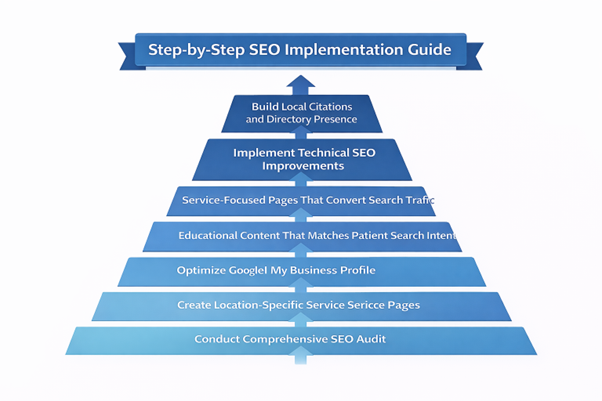
Conduct Comprehensive SEO Audit
Start by analyzing your current search performance and identifying improvement opportunities. Use Google Search Console to see which keywords already bring traffic. Check your current rankings for important local keywords using tools like SEMrush. Identify technical issues that might be preventing better rankings.
Optimize Google My Business Profile
Complete every section of your GMB profile with accurate, detailed information. Upload high-quality photos of your office, staff, and equipment regularly. Encourage satisfied patients to leave reviews and respond to all feedback professionally. Post regular updates about services, health tips, or office news.
Create Location-Specific Service Pages
Build dedicated pages for each service you offer in each location. Include detailed information about treatment benefits, what to expect, and pricing. Add patient testimonials and before/after stories when appropriate and permitted. Optimize each page for local keywords related to that specific service.
Educational Content That Matches Patient Search Intent
Strong chiropractic SEO starts with answering the exact questions patients search online. Blog posts and guides should cover common conditions like lower back pain, neck pain, headaches, and sciatica, along with treatment options, benefits, and when to seek professional care. This type of condition-based content aligns with early-stage searches and positions your practice as a trusted authority.
Develop Patient-Focused Content Strategy
Plan blog content that answers common patient questions about pain and treatment. Create comprehensive guides for conditions you treat most frequently in practice. Include practical advice patients can use before and after appointments. Share success stories that demonstrate your expertise and results.
Service-Focused Pages That Convert Search Traffic
Well-structured service pages are essential for chiropractor SEO performance. Each treatment you offer, such as spinal adjustments, sports injury care, or auto accident treatment, should have a dedicated page explaining who it’s for, how it works, expected outcomes, and recovery timelines.
Build Local Citations and Directory Presence
Submit your practice information to relevant healthcare and business directories consistently. Ensure your name, address, and phone number match exactly everywhere. Focus on high-authority directories that patients actually use to find providers. Monitor and update listings regularly to maintain accuracy.
Multimedia and Local Content That Builds Trust
Videos, testimonials, and locally relevant content strengthen engagement and credibility. Patient success stories, exercise demonstrations, and office tour videos help humanize your practice, while locally focused content connects your services to the community you serve.
Implement Technical SEO Improvements
Optimize your website’s loading speed by compressing images and minimizing code. Ensure your site works perfectly on mobile devices of all sizes. Install an SSL certificate to encrypt patient data and improve trust. Create clean URL structures and proper navigation for better user experience.
Launch Strategic Link Building Campaign
Partner with other local healthcare providers for mutual referral relationships and links. Sponsor community events or local sports teams for brand exposure. Write guest articles for local publications or business journals when possible. Join professional associations and local business organizations for networking opportunities.
Set Up Analytics and Tracking
Install Google Analytics to track website traffic, user behavior, and conversion rates. Set up Google Search Console to monitor search performance and technical issues. Use call tracking numbers to measure phone calls generated from SEO. Create monthly reports to track progress and identify areas for improvement.
Essential SEO Tools for Chiropractic Practices
Free SEO Tools Every Practice Needs:
- Google Analytics – Track website traffic and user behavior patterns
- Google Search Console – Monitor search performance and technical issues
- Google Keyword Planner – Basic keyword research and search volume data
- Google My Business Insights – Track local search performance and customer actions
Premium SEO Tools Worth Investing In:
- SEMrush ($119/month) – Comprehensive keyword research and competitor analysis tools
- Ahrefs ($99/month) – Advanced backlink analysis and content research capabilities
- Moz Pro ($79/month) – Local SEO tools and rank tracking features
Local SEO Specialized Tools:
- BrightLocal – Citation building and local search rank tracking services
- Whitespark – Local citation finder and reputation management platform
- Yext – Centralized listing management across multiple directories and platforms
Tool Selection Guidelines: Small practices should start with free tools and add premium options gradually. Medium practices benefit most from one comprehensive tool like SEMrush or Ahrefs. Large practices may need multiple specialized tools for different SEO aspects.
Focus your budget on tools that provide actionable insights you’ll actually use. Many practices waste money on expensive tools they rarely access properly.
Measuring Your Chiropractic SEO Success
Primary Performance Indicators:
- Organic search traffic increases month-over-month consistently
- Local keyword rankings improvements for target terms
- Google My Business profile views and click-through rates
- Phone calls and form submissions from organic search traffic
Patient Acquisition & Incentives
Track new patient appointments, website-to-appointment conversion, and cost per patient. Use AI-powered personalized incentives and behavioral targeting to turn anonymous visitors into loyal patients, boosting conversions and patient value.
Technical Performance Metrics: Monitor page loading speeds across desktop and mobile devices regularly. Track Core Web Vitals scores for user experience optimization. Measure mobile usability and fix any issues that arise quickly. Check for crawl errors and technical issues in Search Console.
ROI Calculation Methods: Compare SEO investment costs to revenue generated from new patients. Track the lifetime value of patients acquired through organic search. Monitor improvements in overall practice revenue correlated with SEO progress. Calculate the payback period for SEO investments based on patient acquisition.
Reporting Schedule Recommendations: Review basic metrics weekly to catch issues early before they impact rankings. Conduct comprehensive monthly analysis of traffic, rankings, and conversion performance. Perform quarterly strategic reviews to adjust tactics and set new goals.
Common Chiropractic SEO Mistakes to Avoid
Keyword Stuffing Problems: Forcing keywords in the contents that you have worked tirelessly is unhealthy and it hurts readability and rankings both. Google has algorithms which detects and penalizes those who do such activities, which obviously comes in as keyword manipulation attempts consistently. To avoid it, you should write contents on your own for the patients first, then optimize for search engines. Use keywords when they fit naturally into helpful, informative content.
Ignoring Local SEO Importance: If you keep on neglecting local SEO then you drive away your customers to your competitors, as many practices focus on general SEO while neglecting local optimization completely.
If you start focusing on local SEO you have a higher chance of getting more chiropractic appointments, especially for new patients. Optimize Google My Business profiles and maintain consistent citations everywhere. Create location-specific content for each area you serve patients.
Poor Website Speed Performance: Slow-loading websites frustrate patients and hurt search rankings simultaneously significantly. Google considers page speed a direct ranking factor for all searches. Compress images, minimize code, and choose reliable hosting providers for optimal performance. Test loading speeds regularly on both desktop and mobile devices.
Missing Schema Markup Implementation: Healthcare schema markup helps Google understand your practice information much better. This structured data can improve your appearance in search results dramatically. Include business information, services offered, and review ratings when implementing schema. Many practices miss this technical SEO opportunity completely.
Inconsistent NAP Information: Name, address, and phone number variations confuse Google’s local ranking algorithm significantly. Check every directory, social profile, and website for exact consistency. Even small differences like “St” versus “Street” can impact rankings. Maintain a spreadsheet tracking all your online listings for accuracy.
Neglecting Mobile Users Experience: Google uses mobile-first indexing, meaning mobile performance affects all rankings now. Many chiropractic websites still don’t work properly on smartphones and tablets. Test your website on multiple devices and fix any functionality issues. Mobile users represent the majority of local healthcare searches today.
Copying Competitor Content Directly: Duplicate content penalties can devastate your search rankings across all pages. Create original, valuable content that serves your specific patient community needs. Research competitor topics but write unique perspectives and insights always. Google rewards originality and expertise over copied information consistently.
Expecting Immediate Results Unrealistically: SEO requires 3-6 months to show significant results for most practices. Many practice owners give up too early before seeing optimization benefits. Set realistic expectations and focus on consistent, long-term effort over quick fixes. Track progress monthly but judge success over longer time periods.
Advanced SEO Strategies for Competitive Markets

Content Cluster Strategy Implementation: You need to have a proper roadmap and a comprehensive topic covering complete subject areas thoroughly rather than individual posts and according to the search intent.
For instance: Build pillar pages for major conditions like back pain, then create supporting articles. Link related content together to show topical authority and expertise. This approach helps you rank for broader keyword categories effectively.
Video SEO Optimization Tactics: YouTube is the second largest search engine, you can start making videos, create educational videos about common conditions and treatment options for patients.
Optimize video titles, descriptions, and thumbnails for relevant keywords consistently. Embed videos on your website to increase engagement time and rankings.
Voice Search Optimization Preparation: Voice searches use conversational, question-based queries more than typed searches. Optimize for “near me” searches and natural language questions patients ask. Create FAQ sections that answer common questions in conversational formats. Focus on featured snippet optimization to capture voice search results.
Featured Snippet Optimization Techniques: Structure content to answer specific questions clearly and concisely for featured snippets. Use bullet points, numbered lists, and clear headings to format answers. Target “what is,” “how to,” and “why” questions related to chiropractic care. Featured snippets can dramatically increase your visibility and click-through rates.
Advanced Competitor Analysis Methods: Use tools like SEMrush to identify content gaps in competitor strategies. Find keywords competitors rank for that you’re missing completely. Analyze their content quality and find opportunities to create better resources. Monitor competitor backlink strategies and identify link building opportunities.
Next Steps
To move forward, focus on the actions that create the biggest impact first and build momentum over time. A structured approach makes SEO easier to manage and more effective for long-term growth.
Start with the essentials
- Prioritize local SEO, since most patients search for chiropractors near them
- Ensure your website is fully optimized for mobile users
- Create helpful, educational content that answers real patient questions
- Maintain consistent name, address, and phone (NAP) details across all platforms
Take immediate action
- Claim and fully optimize your Google Business Profile
- Review your website’s mobile performance and page loading speed
- Research local keywords that your potential patients are actively searching for
- Publish patient-focused content around common conditions and treatments
- Set up Google Analytics and Google Search Console to track performance
Set realistic expectations
- Technical improvements often show results in 30–60 days
- Local SEO gains typically appear within 2–3 months
- Content marketing and link building show stronger results in 3–6 months
- Full SEO impact usually develops over 6–12 months of consistent effort
Use the right tools and support
- Start with free tools like Google Analytics, Search Console, and Keyword Planner
- Consider advanced tools such as SEMrush, Ahrefs, or BrightLocal as you scale
- Seek professional SEO help if time, technical complexity, or competition becomes a challenge
Following these steps methodically will help you build a strong, sustainable SEO foundation that supports long-term growth for your chiropractic practice.
Conclusion
SEO for chiropractors is ultimately about helping the right patients find your practice when they need care. By focusing on local visibility, patient-focused content, and consistent optimization, you create a steady way for people searching online to discover and trust your services.
SEO is not an instant fix, but with consistent effort, it becomes one of the most reliable ways to grow your chiropractic practice over time.

Chiropractor PPC: A Complete Guide to Ads, Costs, and Patient Growth
Chiropractor PPC helps clinics show ads to people actively searching for care nearby. It allows practices to appear at the top of search results quickly.
Read More
Step-by-Step Local SEO for Chiropractors: What Actually Works
Imagine you are dealing with neck pain and are in need of immediate help. While searching for a chiropractor, you will certainly want someone closer to home.
Read More
Chiropractor Marketing Ideas That Attract Local Patients
Local growth matters more than wide reach for chiropractic clinics. Most patients search nearby. They want care they can trust. They also want fast answers and clear choices.
Read More
Google Ads for Chiropractors: Targeting Local Searches
Google Ads helps chiropractors reach people who need care right now. Most patients search for help close to home. Local searches drive real appointments, not just website visits.
Read More
SEO for Chiropractors: Complete Guide to Growing Your Practice
Is your chiropractic business struggling to attract new patients? If after being online present your competitors getting more bookings? If that’s the case, you have reached the right place.
Read More
Top 10 Local SEO Strategies for Physiotherapists in 2026
Providing excellent patient care alone is no longer sufficient for physiotherapy clinics. Today, most patients research healthcare providers online before scheduling their first appointment.
Read More


