



Free Funnel Audit
Convert more customers today!
SEO
10 mins read

SEO
10 mins read
Many SaaS companies think ads alone drive growth. One startup spent $50K a month on ads but got very few qualified leads. Wondering what was the problem was? Well, they ignored SEO. Without organic search, they were invisible to users actively looking for solutions.
Most SaaS teams struggle with SEO because the same mistakes repeat across companies and growth stages. These issues are not advanced or technical in most cases. There are strategic gaps that slowly block rankings and reduce long-term results.
Even while working on their SEO strategies, these companies make some common mistakes that affect their online ranking. The sections below break down each SaaS SEO mistake in detail. Each mistake includes clear reasons and practical fixes you can apply quickly.

SEO is the heart of a successful SaaS business. Even if you spend money on paid ads, your product can go unnoticed without an effective SEO strategy. Therefore, a detailed focus on SEO is necessary. Optimized SEO brings:
Proper SEO ensures your SaaS product reaches the right audience, generates leads, and builds credibility online. Combining organic and paid strategies reduces costs and maximizes growth.
The 10 Most Common SaaS SEO Mistakes & How to Fix Them
Many SaaS websites fail because of common SEO missteps. Below, we will explore 10 mistakes that slow rankings and practical ways to fix them.
Many SaaS pages fail because they target keywords without matching user intent. On the other hand, many SaaS sites focus only on features, not on what users want.
Poor layout, confusing menus, and slow-loading pages make engagement even worse. When companies ignore search intent, it often leads to high bounce rates and low conversions.
Optimizing UX ensures users find value quickly and spend more time exploring your site. Aligning content with user intent helps both engagement and search rankings.
Ranking alone does not matter if the page solves the wrong problem. This mistake often leads to traffic that never converts or engages.
Google ranks pages that best satisfy search intent. If users bounce quickly, rankings slowly decline. This happens often when SaaS content targets the wrong funnel stage.
For example, a product page may target an early research keyword. The user expects education, but the page pushes a demo too early. This mismatch creates poor engagement signals over time.
This alignment improves rankings and conversions together.
Many SaaS companies focus only on high-volume keywords, ignoring relevance and intent. Head terms are competitive, while long-tail keywords capture users ready to act.
Without proper keyword research, your content may never reach the right audience. Targeting relevant, high-intent phrases improves both traffic quality and conversion rates.
Head terms vs long-tail keywords:
Actionable strategies:
Proper keyword research combined with SaaS SEO tips ensures your site reaches users likely to convert.
This mistake is something that not just SaaS companies, but almost every company does. They create content once and forget about it.
For example, a startup published a guide on onboarding software in 2021 but never updated it. By 2023, competitors outranked them with fresher, more relevant content.
Search engines favor content that’s relevant, up-to-date, and that reflects current trends and user needs.
Tracking competitor updates and industry trends ensures your pages stay authoritative. Regularly updating your content helps in maintaining rankings and attracting qualified traffic consistently.
Best practices:
Regular updates keep your site authoritative and valuable for search engines and users alike.
SEO is not just about focusing on traffic. This is something most SaaS companies what SEO is about. SEO is also about focusing on qualified leads.
Without clear goals, SEO efforts can waste time and resources. Defining ICPs (Ideal Customer Profiles) and SMART goals ensures every action aligns with business growth.
High traffic does not always equal high conversions. Developing detailed buyer personas helps guide content, keywords, and campaigns. Clear objectives make SEO measurable and results-driven.
Key considerations:
Clear SEO objectives combined ensure every effort aligns with business growth.
Internal links guide both users and search engines. Weak linking leaves valuable pages isolated and underpowered. This mistake is common across growing SaaS sites.
Blogs often fail to link to product or conversion pages. Even helpful blogs may exist without links from ranking content. This wastes authority and crawl efficiency.
On the hand hand, a strong internal linking strategy follows the user journey. Each page should point naturally to the next logical step.
Fixing internal links is fast and highly effective as it often produces quick ranking improvements. Optimizing internal linking ensures all pages are discoverable and valuable.
Internal linking best practices:
A well-structured site with proper internal linking improves navigation, user experience, and search rankings.
Many SaaS teams delay technical SEO because it feels complex. But small technical issues can silently block rankings across the entire site. Technical issues can quietly harm a SaaS site’s rankings.
Slow-loading pages, mobile-unfriendly design, and broken links frustrate users. Search engines struggle to crawl pages with errors or missing metadata.
These problems often grow as the product and content expand.
Index bloat is a common issue inside SaaS platforms. Filters, parameters, and duplicate URLs confuse search engines. This wastes crawl budget and weakens important pages.
JavaScript-heavy pages also cause rendering problems. Search engines may not fully load or understand the content. This reduces visibility even when content quality is strong.
Key technical areas to optimize:
To fix this:
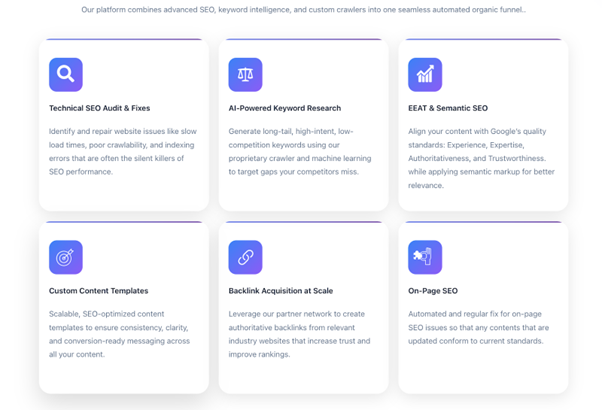
Don’t ignore the technical SEO as these technical areas can improve crawlability, user experience, and organic visibility. Companies like CausalFunnel help in technical SEO by auditing your website and fixing the common issues to make sure your website is seen online.
SEO without measurement is just shooting arrows in the dark. SEO is not guesswork. It needs quantifiable measurement so you can understand what’s working and what’s not.
Traffic without conversions is not a growth win. Many SaaS teams measure SEO success only by rankings. This disconnect limits revenue impact over time.
When you track the metrics, they reveal what works and highlight areas for improvement. Make sure to conduct audits regularly, as they help identify weak content or underperforming keywords.
Data-driven adjustments ensure strategies remain effective and aligned with goals. Monitoring performance keeps your SaaS SEO efforts results-focused.
Important KPIs:
Backlinks signal authority, but not all links are equal. A SaaS startup once focused on quantity over quality and gained links from irrelevant, low-authority sites. Their rankings barely improved despite many backlinks.
We always emphasize high-quality, niche-relevant links. They are far more effective for SEO. Guest posting, partnerships, and shareable content attract valuable links. When you have a strong backlink profile, it will not just build authority but also boost credibility, referral traffic, and search visibility.
Actionable strategies:
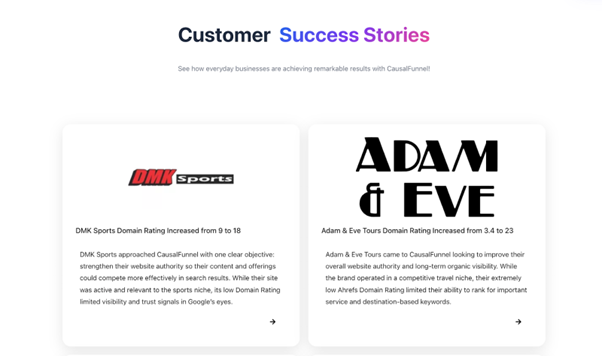
Help content is one of the most overlooked SEO assets. Users often search Google instead of product dashboards. This creates strong demand for support-focused pages.
It is important that you set up guides, integrations, and troubleshooting pages to rank well. They capture long-tail searches with high intent and also support retention and user satisfaction.
Many SaaS teams hide these pages or block indexing. That removes valuable search visibility.
To fix this:
Publishing more content does not guarantee better rankings. Thin and repetitive blogs dilute authority over time. Search engines reward usefulness, not output volume.
Many SaaS blogs repeat surface-level advice. They add little insight beyond existing search results. This makes differentiation difficult.
Content is considered to be strong when it answers questions fully and clearly. It uses real examples and practical guidance. Focusing on benefit-driven content ensures visitors stay longer and take action.
Also, ensure regular reviewing and refreshing to keep your content and website relevant and authoritative.
Tips:
Well-rounded and detailed content ensures value creation for both users and search engines.
Actionable SaaS SEO Fix Checklist
Use this checklist to spot and fix common SaaS SEO mistakes quickly. SEO is about progress, not solely about perfection.
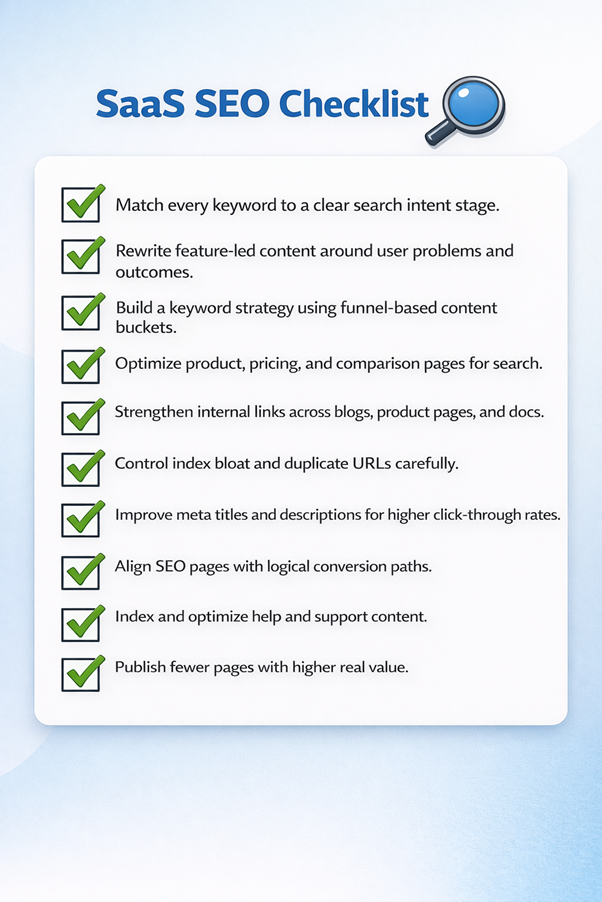
Small fixes here can unlock meaningful ranking gains.
Advanced SaaS SEO Strategies for Better Rankings
Once you fix the basics, advanced strategies help your SaaS website stand out. These focus on user value, authority, and qualified traffic.
CausalFunnel enhances these strategies by using AI-driven insights to target users more effectively. Its intent-based targeting predicts user behavior, offering timely incentives that can boost conversions. With integrated keyword intelligence and backlink recommendations, CausalFunnel supports broader SaaS SEO goals, improving organic traffic, click-through rates, and ROI.
Tracking performance is critical to understand what works and where to improve. Without measurement, your SEO strategy is guesswork.
Key metrics to monitor:
Pointers for effective tracking:
Most SaaS SEO mistakes are common and fixable. They do not require rebuilding your site or content library. They require better alignment between users, content, and intent.
Start by fixing one or two high-impact issues first. Measure results and iterate based on performance. SEO growth comes from steady improvements, not quick hacks, and professional help from CausalFunnel. When strategy and execution work together, rankings follow naturally.
Ignoring search intent, chasing only high-volume keywords, publishing thin or generic content, weak on-page optimization, poor technical hygiene (slow site, crawl issues), and neglecting link building and product-led content are some of the most common SaaS SEO mistakes.
SaaS SEO must map to a longer, multi-stage buyer journey, handle subscription metrics (LTV, churn), and usually targets B2B decision-makers searching for solutions rather than one-time products.
They often skip deep keyword research, target broad or vanity terms, rely only on free tools, and ignore long-tail, problem-based queries that actually drive signups and demos.
Wrong intent means optimizing for keywords that don’t match what the searcher wants, such as ranking an awareness blog post for a bottom-funnel “tool” query or sending “how to” searchers to a salesy product page.
No. Low-volume, high-intent long-tail keywords (e.g., “best CRM for real estate teams”) often bring fewer visits but much higher conversion rates than generic, high-volume terms.
Slow page speed, unoptimized Core Web Vitals, mobile-unfriendly layouts, messy URL structures, index bloat, and crawl errors often block or limit organic growth.
Start using our A/B test platform now and unlock the hidden potential of your website traffic. Your success begins with giving users the personalized experiences they want.
Start Your Free Trial

Empowering businesses to optimize their conversion funnels with AI-driven insights and automation. Turn traffic into sales with our advanced attribution platform.
Trusted by Customers


©CausalFunnel Inc. All rights reserved.